The answer
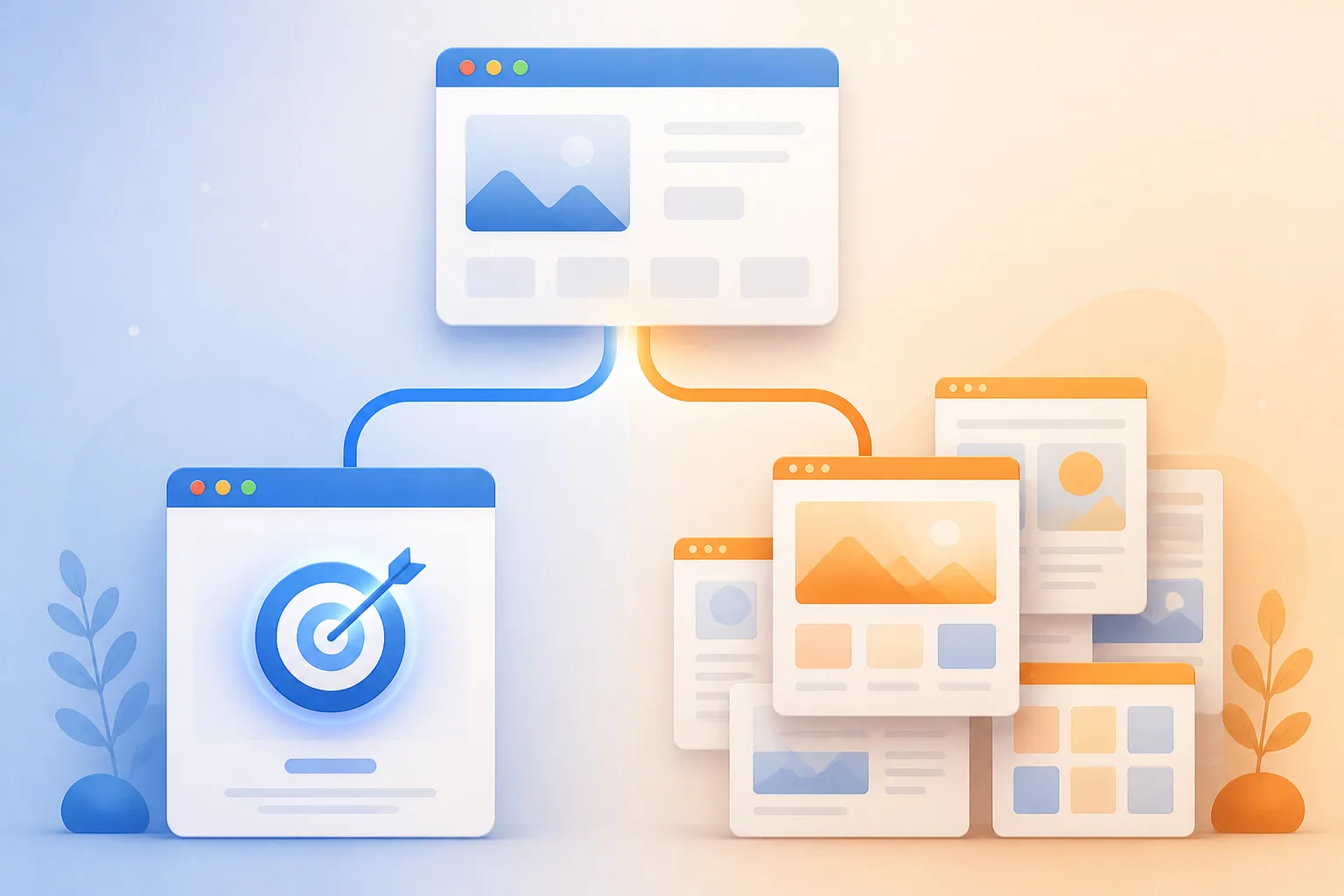
A landing page fits a single offer or conversion goal, while a multi-page business website supports broader information and exploration. The landing page vs website choice depends on whether visitors need one clear action or access to interconnected pages; a landing page centers on one goal, while a website can expand with the business. A business can also use both together.
Notes
- A landing page focuses on one goal and one action.
- A business website can show services, operating hours, contact information, and testimonials.
- Landing pages can be optimized for SEO.
- A business can host a landing page within its website’s domain.
- The available sources provide no average cost to build or maintain either option.
What are the main differences between a landing page and a multi-page website?
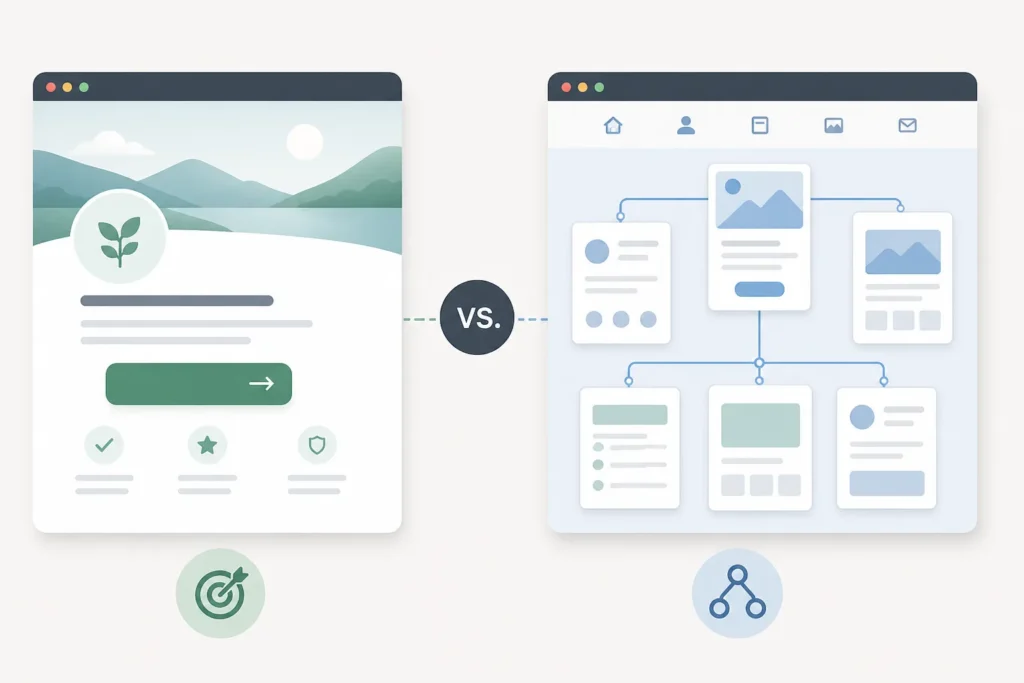
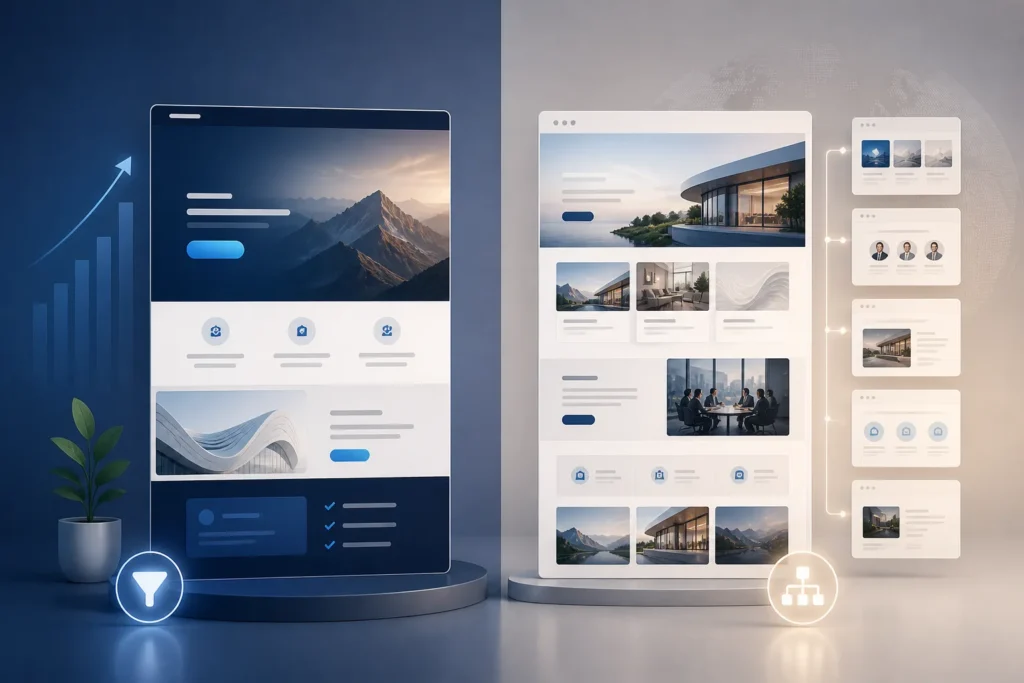
The landing page vs website distinction starts with purpose: a landing page is a standalone page built around one goal and action, while a multi-page website gives visitors a broader place to explore a business. A landing page typically limits navigation so visitors stay focused; a website links pages together and supports exploratory browsing.
A business website can present services, operating hours, contact details, and testimonials. A one-page website may still cover several topics in scrollable sections, so it isn’t automatically the same as a focused landing page. In the landing page vs website comparison, the key question is whether the page serves one conversion goal or helps visitors explore more broadly.
| Attribute | Landing page | Multi-page website |
|---|---|---|
| Purpose | One goal and action | Explore business information and offerings |
| Structure | Standalone page | Interconnected pages |
| Navigation | Limited or removed | Structured paths between pages |
For the landing page vs website choice, decide whether visitors should take one defined action or navigate among multiple parts of your business.
See landing page design portfolios
Key points
- Choose a landing page when a campaign has one offer and a specific action.
- Choose a multi-page website when visitors need broad business information or content that supports organic growth.
- Use both when you need a central business presence and focused campaign destinations.
- Treat cost figures as unknown: the sources give no average build or maintenance prices.
- Test page changes and measure outcomes rather than relying on unsupported conversion benchmarks.
- Settle landing page vs website by counting how many offers you need to promote.
Landing Page Vs Website: Which One Does Your Business Need?
The landing page vs website choice depends on your business stage, immediate goal, audience, traffic source, and the scope you can support. A landing page suits a specific offer, lead-generation goal, or targeted paid campaign; a multi-page website better fits broad brand information, multiple products or services, content marketing, and organic growth.
For paid advertising, send visitors to a page that matches the campaign objective, such as a focused landing page or relevant service page, instead of defaulting to the homepage. The messaging, design, information, and call to action should reflect the ad or other source that brought the visitor.
People may discover a business through search, social platforms, ads, recommendations, or AI-generated answers; the evidence doesn’t establish how those channels will change. In the landing page vs website decision, consider whether a visitor needs one clear next step or room to compare offerings. The landing page vs website framework is practical: choose the smaller, more focused destination when the campaign has one objective, and a broader site when visitors need more information.
Can your business use both a landing page and a website?
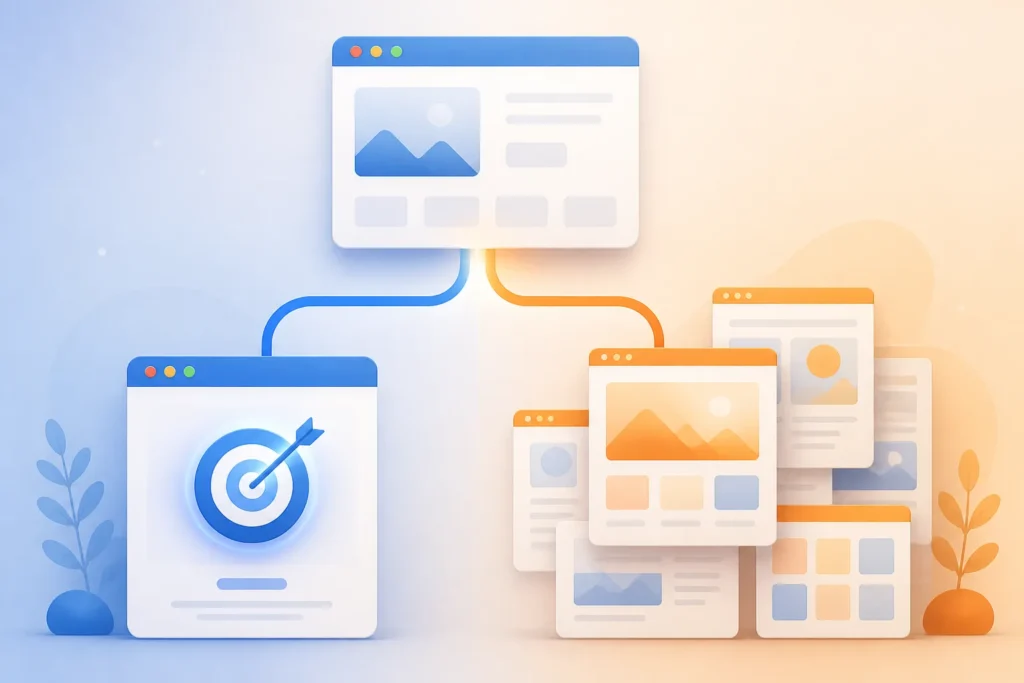
The landing page vs website decision doesn’t have to be either-or: a business can use its website as a central place for trust, education, and long-term visibility, with landing pages focused on specific offers and campaigns. This arrangement gives visitors broader information when they need it and a campaign-specific next step when that’s the goal.
Campaign pages can sit within the website’s domain. A website can also bring landing pages together with a blog, product pages, and an e-commerce store. That structure lets a small business or online seller keep its main presence while creating focused destinations for particular promotions.
Keep product information, service details, pricing, policies, and other customer-facing information consistent across touchpoints. The landing page vs website relationship works best when campaign pages support the same business information visitors find elsewhere. For a business using both, the landing page vs website roles are complementary: one serves as the wider brand hub, the other as a focused campaign destination.

Start your landing page design project
What does it cost to build and maintain a landing page versus a business website?
The available sources provide no average build or maintenance price for either a landing page or a business website. So there’s no evidence here for a reliable average cost comparison, platform-specific price, build timeline, or maintenance estimate.
One source describes landing pages as costing less because they require less design and development effort and cost less to host. That is a relative statement, not a price quote. The scope difference helps explain it: a landing page focuses on one goal, while a multi-page website has interconnected pages for different content or functions.
For the landing page vs website decision, list what the project must include before requesting estimates: the number and type of pages, campaign needs, and ongoing updates. The landing page vs website cost question remains unanswered in average-price terms by these sources. Compare proposals based on the work described rather than assuming a specific build cost. The landing page vs website choice should reflect the scope your business needs, not an invented price range.
How do landing pages and websites compare for SEO, organic traffic, and conversion tracking?
The landing page vs website SEO trade-off is about breadth: a website’s multiple pages and blog content create more opportunities for search visibility, while a landing page’s limited content may restrict organic reach. A landing page can still be optimized for SEO and target specific queries.
For tracking, a landing page’s unique address can make its traffic and engagement easier to follow, and analytics or heatmaps can show how visitors interact with it. Don’t stop at counting leads. Plan a test, change an element such as the headline, imagery, or call to action, then measure the outcome and decide what to try next.
The landing page vs website choice should follow the role of each destination: use a focused page for a defined action, and broader site content when you need more opportunities for organic discovery. The landing page vs website comparison doesn’t establish conversion benchmarks; test your own page changes and assess the results.
Browse landing page design on Fiverr
What steps should you follow to create a landing page that converts?
The landing page vs website distinction matters during setup: a landing page should guide a defined audience toward one offer and one primary action. Use this process for a small business campaign, an online product, or a service offer.
- Define the offer and audience. Decide what you’re promoting and who the page is for.
- Match the traffic source. Align the page’s messaging, design, information, and call to action with the ad, email, or social post visitors saw.
- Write the page. Use a benefit-focused headline and copy, then add proof that supports the offer.
- Choose one primary CTA. A lead capture form can collect contact information for an offer.
- Consider mobile use. Plan for mobile-first speed and click-to-call where useful.
- Test and measure. Test headlines, imagery, or calls to action, measure what happens, and use the results to choose the next change.
In the landing page vs website workflow, keep the page focused rather than adding unrelated destinations. The landing page vs website choice also affects how much supporting information belongs on the page: include what helps visitors understand the offer and act.
When should you expand a landing page into a full website?
The landing page vs website question changes when one page can no longer support the business’s content or offerings. Signs to consider expanding include needing more landing pages or other content under one domain, presenting additional offerings, or prioritizing long-term discoverability. A multi-page website can connect distinct content and functions and expand as the business grows.
One reported example describes an app-launch landing page expanding into a website with features, testimonials, pricing, and ongoing content as momentum grew. A website can also hold campaign landing pages alongside a blog, product pages, and an e-commerce store.
Assess whether your team can create and update website content without depending on a developer for every change. For the landing page vs website choice, start with the smallest build that supports current goals, but leave room to add pages or campaign-specific landing pages as needs grow. The landing page vs website decision should follow your actual content and business needs, not a preset page count.
Get landing page design pricing
| Source | Reported finding |
|---|---|
| nexterwp.com | The source reports an average landing-page conversion rate of 5.89% across… |
| webnhubs.com | The article says businesses with or more landing pages generate times more… |
| waisite.com | The source says companies using more than landing pages experience up to a… |
| convertri.com | The source claims that landing pages are 3–5 times more effective than a… |
| Source | Cost information stated |
|---|---|
| nexterwp.com | A landing page costs less than a website because it requires less design and… |
| chyrkov.studio | The article does not state an average cost to build or maintain either a landing… |
| yourdigitalpeople.com | The source does not provide an average price for building or maintaining either… |
Questions from clients
What are the key differences between a landing page and a website?
A landing page is a standalone page built around one goal and action, while a business website connects multiple pages for broader information and exploration.
What are the C’s of a website?
The available claims don’t describe the C’s of a website, so that framework can’t be defined from the evidence provided.
What is the average cost of a landing page?
The available sources provide no average price for building or maintaining a landing page. One source says landing pages cost less than websites because they require less design and development effort and cost less to host.
How to create a successful landing page?
Define one offer and its target audience, match the page to the traffic source, and use a benefit-focused headline, supporting proof, and one primary call to action. Test changes and measure the results.
