
The answer
What Makes UX/UI Design Actually Improve Conversions is the combination of usable UX, clear UI, evidence-led research, and repeated testing across websites, landing pages, and online stores. UX smooths task completion, while intuitive UI can reduce bounce and increase conversions; the reported average e-commerce conversion rate was 2.9% in 2022, but that isn’t a universal target.
Notes
- The reported average e-commerce conversion rate was 2.9% in 2022.
- UX design is responsible for usability, defined as how easily users can perform desired tasks.
- The reported UX-improvement conversion-growth range is 20% to 200%.
- Small changes may show results in days, while full-scale UX designs generally show positive conversion results in 2–4 weeks.
- Reported UX-design investment returns typically range from 2:1 to 100:1 or higher.
What Makes UX/UI Design Actually Improve Conversions? How do UX design and UI design differ in their effects on conversion rates?
UX design governs usability: how easily users can perform the tasks they want to complete. UI design shapes the interface users see and interact with, and intuitive, aesthetically pleasing UI can reduce bounce rate and increase conversions. Conversion rate optimization is the systematic process of increasing the share or percentage of visitors who take a desired action.
What Makes UX/UI Design Actually Improve Conversions is the connection between a usable journey and an understandable interface. Positive UX can smooth the conversion process and increase conversions, while UI can influence whether visitors remain engaged long enough to act. What Makes UX/UI Design Actually Improve Conversions also depends on the action you measure, such as a purchase or form submission. For context, the reported average e-commerce conversion rate was 2.9% in 2022; that figure isn’t a target for every site. What Makes UX/UI Design Actually Improve Conversions should therefore be assessed against your own baseline and desired action, not treated as a universal design formula.

Key points
- Start with the conversion action you want to improve and measure it consistently.
- Use analytics to locate drop-offs, then use research to understand why users struggle.
- Test small, clearly hypothesized changes before expanding the design.
- Check mobile layouts, accessibility practices, and page speed alongside conversion results.
- Treat a conversion lift as something to monitor and validate over time.
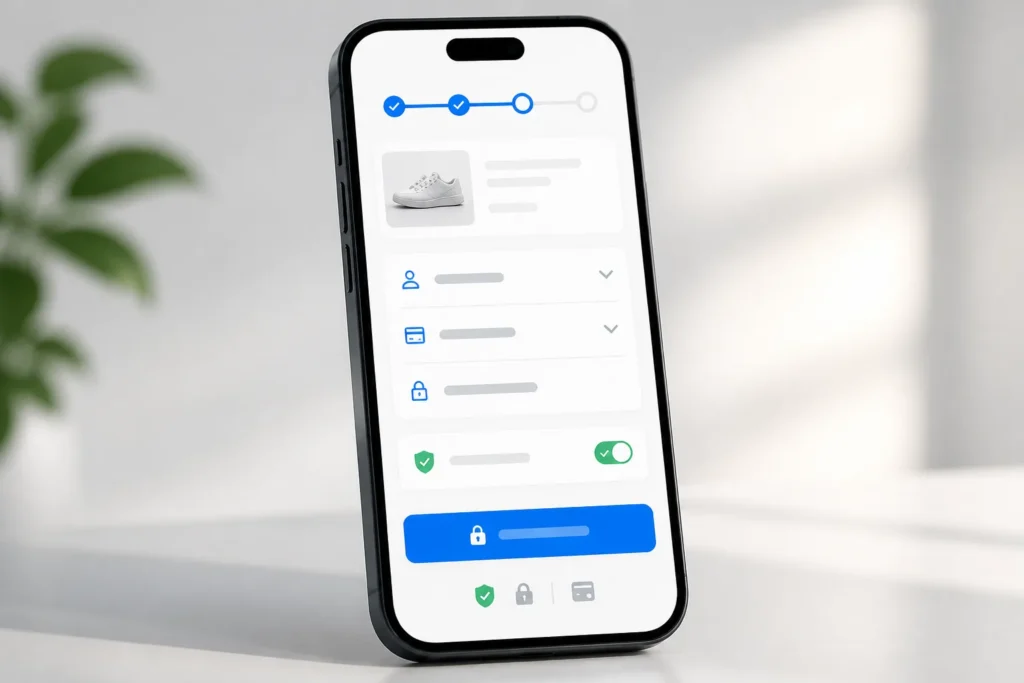
Checkout streamlining, fewer form fields, improved mobile experiences, faster page loads, clearer value propositions, stronger calls to action, trust markers, and removing flow bottlenecks are reported as changes with significant conversion benefits. What Makes UX/UI Design Actually Improve Conversions often starts with removing avoidable effort: simplified e-commerce checkout can reduce cart abandonment and increase sales.
What Makes UX/UI Design Actually Improve Conversions also includes navigation that helps visitors find what they need, strategically placed calls to action, and buttons that communicate value clearly. For mobile pages, responsive design, thumb-friendly button sizes, suitable spacing, and simplified forms support conversion optimization. A/B tests can compare headlines, images, and calls to action. One source reports UX-improvement conversion growth of 20% to 200%, but that is a reported range, not a guaranteed outcome. What Makes UX/UI Design Actually Improve Conversions must be verified on your website, landing page, or store.
Which analytics metrics and user research methods reveal where visitors encounter friction in a conversion journey?
Analytics can show where visitors stop moving through a conversion journey. Bounce rate and session duration can identify areas for improvement, while time on page, conversion rate, click-through rate, scroll depth, page views, and interactions per visit add context. What Makes UX/UI Design Actually Improve Conversions becomes clearer when you compare these measures with the page or step where behavior changes.
Google Analytics can reveal drop-off points, high-bounce pages, and the percentage of visitors who leave after viewing one page. What Makes UX/UI Design Actually Improve Conversions also requires qualitative evidence: heatmaps, session recordings, feedback collection, surveys, interviews, and usability testing can expose behavior and pain points. Task success rate shows whether users complete specific tasks, while error rate highlights difficulty. For forms, review abandonment, time spent on each field, and commonly blank fields. What Makes UX/UI Design Actually Improve Conversions should be diagnosed from both numbers and observed user problems.

What steps should a team follow to identify, prioritize, and A/B test design changes for conversion improvement?
A conversion team should first organize analytics and research data systematically, then look for trends, difficult areas, and drop-off points. What Makes UX/UI Design Actually Improve Conversions is easier to test when a problem is stated plainly: for example, a landing-page form may be losing visitors at one field. Form a clear, actionable hypothesis from user data and insights, then choose the main conversion action or rate, such as form submissions or product purchases, as the test metric.
What Makes UX/UI Design Actually Improve Conversions can then be examined through A/B testing, which compares two webpage versions to see which performs better. Use the method to validate whether a UX modification generates sales. Start with small design changes, gather feedback through A/B testing and usability studies, and repeat the cycle of designing, testing, and refining. Split and multivariate testing can compare variations in design, content, and user pathways. What Makes UX/UI Design Actually Improve Conversions should be treated as an iterative process for websites, landing pages, and e-commerce stores.
How much traffic and how long does an experiment need to determine whether a conversion lift is statistically reliable?
Experiment timing varies by the design change: small changes to buttons, call-to-action placement, or forms may show results in days, while full-scale UX designs generally show positive conversion results in 2–4 weeks. What Makes UX/UI Design Actually Improve Conversions cannot be established from elapsed time alone. A result still needs analysis before you decide whether a change should remain in a website, landing page, or online store.
What Makes UX/UI Design Actually Improve Conversions should be judged using the test’s selected conversion action and statistical importance after analyzing the results. The available claims provide no traffic threshold, sample-size formula, confidence level, or power calculation. Those figures are therefore unknown here, and you shouldn’t infer them from the reported timing. What Makes UX/UI Design Actually Improve Conversions requires a decision process that separates an observed lift from a statistically important result. Continue the evaluation when the evidence isn’t sufficient for a reliable decision.
Watch
What budget, tools, and team resources are typically needed for UX/UI conversion optimization?
UX/UI conversion optimization needs measurement, research, testing, and people who can act on the findings. What Makes UX/UI Design Actually Improve Conversions may involve analytics, heatmaps, session recordings, feedback collection, usability studies, A/B testing, and form analytics. The right mix depends on the problem you’re investigating: form analytics suits form friction, while recordings or usability studies can help explain behavior.
What Makes UX/UI Design Actually Improve Conversions is not answered by a universal budget. One source reports UX-design investment returns typically ranging from 2:1 to 100:1 or higher; that is an investment claim, not a budget estimate or guaranteed return. The available evidence doesn’t provide typical budgets, tool prices, staffing levels, project timelines, or team compositions. What Makes UX/UI Design Actually Improve Conversions therefore requires you to scope resources around the website, landing page, or store problem instead of assigning an unsupported standard cost.
What risks or trade-offs can conversion-focused design create for accessibility, page speed, user trust, or long-term retention?
Page speed is a conversion risk: the available claim says even a one-second delay in page-load time can significantly reduce conversions. What Makes UX/UI Design Actually Improve Conversions must therefore include performance checks rather than adding interface elements without considering load time. Accessibility also remains part of the work; image text descriptions and keyboard navigation are recommended practices.
What Makes UX/UI Design Actually Improve Conversions can include trust markers, which are listed among design changes with significant conversion benefits. That claim doesn’t establish a long-term effect on user trust or retention. What Makes UX/UI Design Actually Improve Conversions should also avoid treating a short-term conversion lift as proof that every audience can use the experience. The available evidence doesn’t establish specific measured trade-offs for user trust, retention, or accessibility outcomes beyond the listed practices. What Makes UX/UI Design Actually Improve Conversions remains a balance between action, access, speed, and honest evaluation.

After a design change increases conversions, how should a team monitor results and check that the lift persists across devices and audience segments?
Post-launch monitoring should cover user behavior and website performance after the design change. What Makes UX/UI Design Actually Improve Conversions should be checked with conversion rate, sales revenue, cart abandonment, form completion, time to purchase, bounce rate, page views, and A/B-test results when relevant. These measures help you see whether the original improvement remains visible across the journey rather than relying on one number.
What Makes UX/UI Design Actually Improve Conversions also requires mobile checks. Review behavior and responsive layouts across screen sizes; responsive templates are described as adapting to different screen sizes. The available claims don’t provide a specific persistence window, device-by-device reporting method, audience-segment threshold, or retention-monitoring protocol. What Makes UX/UI Design Actually Improve Conversions should therefore remain an ongoing validation task for a Shiro Web Studio website, landing page, or online store. What Makes UX/UI Design Actually Improve Conversions is a result to keep validating, not a permanent guarantee.
Start your UX UI design project
| Source | Metrics and measures stated |
|---|---|
| tangenttek.com | conversion rate, sales revenue, cart abandonment, form completion, time to… |
| strikingly.com | bounce rate, time on page, and conversion rates; user engagement, task success… |
| useberry.com | conversion rate, average time on site, bounce rate, and user interactions per… |
Questions from clients
How do UX design and UI design differ in their effects on conversion rates?
UX design concerns usability and how easily users complete desired tasks, while UI design concerns the interface and can affect bounce rate and conversions when it’s intuitive and aesthetically pleasing.
Which UX/UI changes can improve conversion rates most?
Checkout streamlining, fewer form fields, improved mobile experiences, faster pages, clearer value propositions, stronger calls to action, trust markers, and removing flow bottlenecks are reported as changes with significant conversion benefits.
Which metrics and research methods reveal conversion friction?
Bounce rate, session duration, time on page, conversion rate, click-through rate, scroll depth, task success rate, error rate, and form-abandonment data can reveal friction.
What process should a team use to test UX/UI changes?
Organize analytics and research data, identify difficult areas and drop-offs, form a clear hypothesis, choose the main conversion metric, then compare page versions through A/B testing and usability studies.
How long should a conversion experiment run?
Small changes to buttons, call-to-action placement, or forms may show results in days, while full-scale UX designs generally show positive conversion results in 2–4 weeks; statistical importance should guide decisions.
